
How 5G Technology Enhance the Internet of Things?
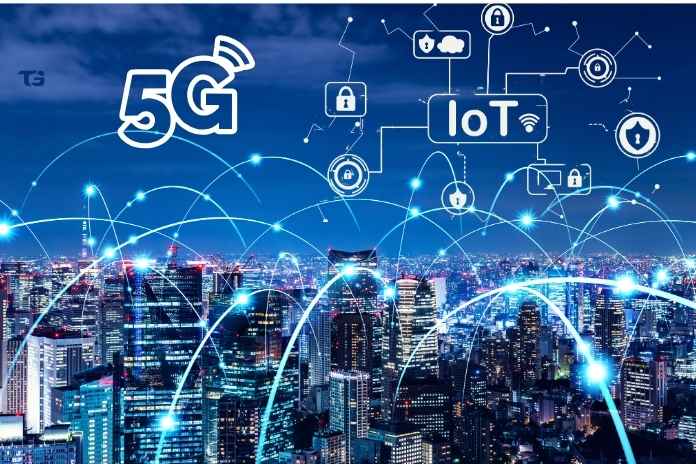
The IoT refers to the Internet of Things that connects everyday physical objects so they can communicate with each other, like sending and receiving data. The Internet of Things depends on networks that can support a large number of devices, which carry small amounts of constant data traffic. While 4G made it possible to connect many devices, it had a hard time handling the huge growth in the number of sensors, cameras and machines in populated areas.
5G tackles these challenges by supporting more device connections, reducing latency and managing the bandwidth and network resources much more efficiently. Thus, applications that were complicated and impractical with older networks like remote surgery and real-time factory automation are achievable with 5G.
How 5G Improves IoT Response Times
Older networks can create a noticeable delay between the devices that send data and when the system responds. With 4G, the round-trip latency is typically around 30 to 50 milliseconds, while 5G reduces that to under 10 milliseconds and, in some setups, even close to 1 millisecond.
In critical situations where every moment matters, this difference is vital. For example, a self-driving car needs to recognise a pedestrian and pull the brakes to stop the vehicle, while a robotic arm on a production line may need to stop as soon as the sensor detects a fault. In such situations, delay is more than a minor inconvenience; it can affect the system’s safety and performance.
How 5G Supports More Connected IoT Devices
A typical 4G cell can support a few thousand connected devices per square kilometer. 5G raises that threshold to around a million. This matters for smart cities and industrial sites, where nearly everything gets a sensor: streetlights, parking spaces, water pipes, shipping containers, and individual machine parts. Without that added capacity, a dense deployment either overloads the network or forces companies to thin out their sensor coverage, which defeats the purpose of the sensors in the first place.
How 5G Can Extend IoT Device Battery Life
Many IoT sensors are designed to run on a single battery for years, especially in regions where replacing or recharging batteries is difficult. Thus, 5G supports operation using low power, allowing the devices to stay in sleep mode when they are not sending data and wake up only when they need to transmit or receive data.
For example, a soil moisture sensor in acres of a large field takes a reading every hour and sends the data, remaining inactive the rest of the time. This arrangement makes it much more practical, making the batteries last many years longer. Hence, in remote areas where regular maintenance is expensive, this approach makes it much more cost-effective.
How 5G Improves IoT Performance in Crowded Conditions
IoT devices often cluster in one place: a warehouse, a stadium, or a factory floor. 4G networks tend to slow down when too many devices compete for the same spectrum in that kind of space. 5G uses network slicing to split available bandwidth into multiple separate virtual channels, so a hospital’s medical monitors don’t compete for capacity with, say, visitors’ phones in the same building.
IoT Applications Enabled by 5G
Some IoT applications need both rapid response and heavy data throughput, a combination that older networks couldn’t really deliver. Augmented reality maintenance tools are one example. A technician can point a device at a piece of machinery and see live diagnostic overlays, which only works if the video feed updates without lag. Remote surgery is a much more extreme case: a surgeon operates equipment from another location, and any delay could affect the outcome. 5G’s combination of low latency and high bandwidth makes both feasible in ways 4G could not.
5G IoT Limitations and Trade-Offs
5G isn’t a simple upgrade. It requires denser infrastructure, since 5G signals cover shorter distances and need more base stations to maintain the same area of coverage. Devices need new hardware, since older IoT sensors and 4G modems aren’t compatible with 5G radio bands. And 5G networks introduce security considerations that come with the architecture itself, from network slicing to the sheer number of new endpoints being added.
The Future of 5G and IoT
5G offers more than just faster speeds. It addresses several drawbacks that made large scale projects difficult, including the number of devices a network can support, the time it takes a signal to travel between endpoints, or how long the battery-powered sensors could work without constant maintenance.
As 5G continues to expand, the cost becomes more manageable, and its use in industries such as manufacturing, healthcare, transportation, and city infrastructure grows larger and wider. While there are still some limitations that exist in the form of cost and security, the overall direction is positive. Many organisations that are developing connected systems in present days, 5G has become the foundation rather than an option.
Also Read: How eSIM Technology Is Revolutionizing Business Connectivity
